AI for small business · Eliot Prince
Alex Hormozi on AI: 6 Lessons for Small Business Owners
I pulled six clips of Alex Hormozi talking about AI and broke down what each one means for a small business, including the one where we part ways.
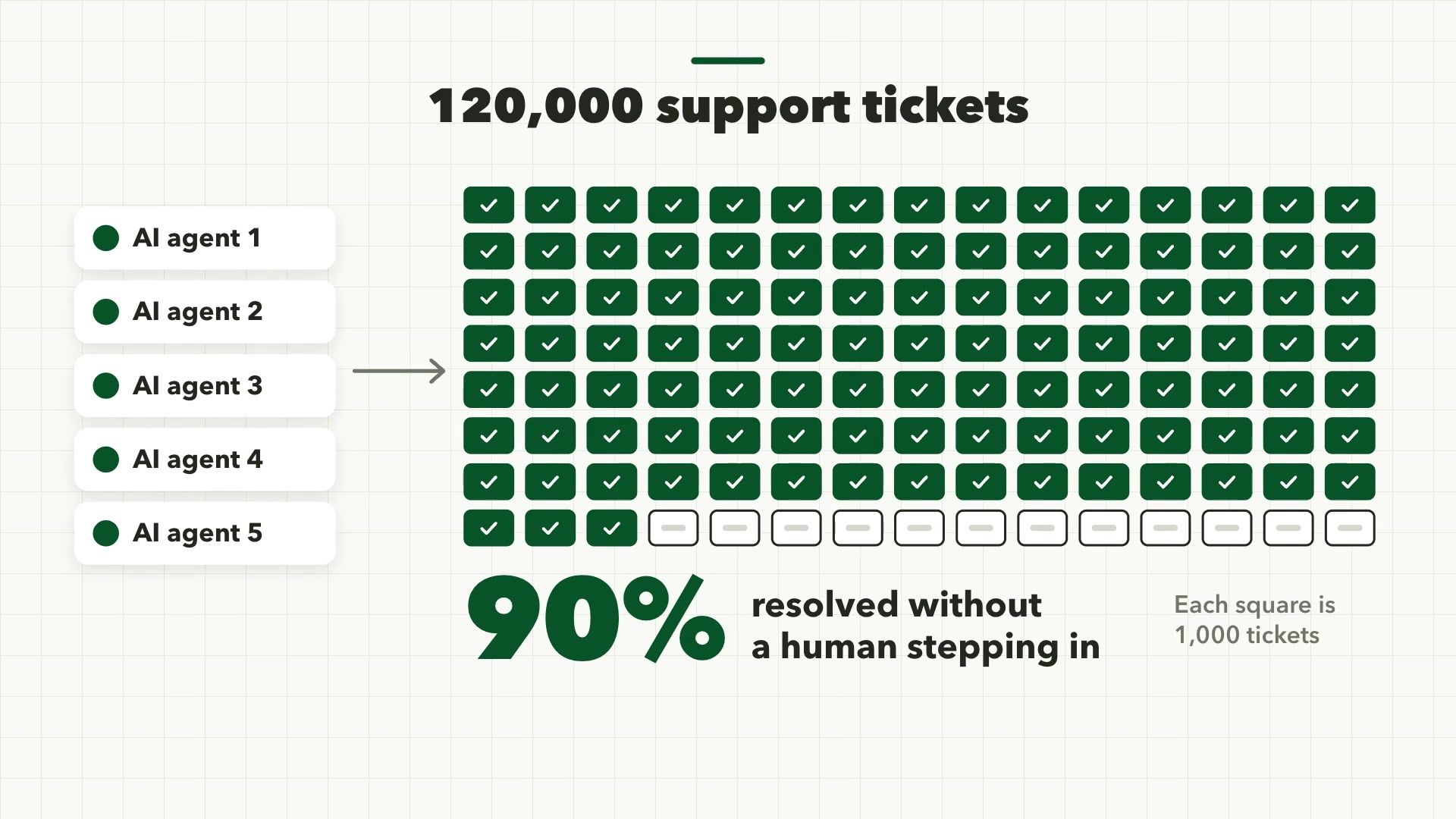
During one book launch, Alex Hormozi's team spun up five AI agents that handled somewhere around 120,000 support tickets, and 90% of them were resolved without a human. That is the kind of thing that makes Alex Hormozi's AI advice worth listening to. He tests this stuff at scale on his own businesses and reports back.
But most of us don't have a $100 million team behind us. So I spent two weeks hunting down everything Hormozi has said about AI and boiled it down to six clips. For each one, here's his advice first, then what it looks like in reality for a small business. I agree with most of it. On one I only half agree, and on one I diverge a little bit.
The biggest thing I see holding business owners back is the story they tell themselves: "AI won't work for my business." My own sister had that mentality. She writes novels, and she'd get up and leave the room if I mentioned the word Claude. Then I built her one AI agent and it changed everything she knew on the spot.
What Does Alex Hormozi Say About AI?
These are the six clips I pulled for the video (published 2 November 2026):
- You don't need to be a tech person, but you've got to get good at this.
- The reason more people don't adopt AI is complacency.
- If you're scared of AI, get over it.
- AI will never be worse than it is right now.
- Businesses seeing their token bills go up are somehow not making more money.
- An army of AI agents could get you a lot more done.
Do You Need to Be Technical to Use AI in Your Business?
No. Hormozi says he isn't a tech person either. In his words, "I largely dislike technology", but he sees it as a necessary evil, with the emphasis on necessary, because "you've got to get good at this".
I kind of largely believe him. I can't see him there with headphones on at 2am in Claude Code hooking up APIs. And the beauty of AI is you don't need to be a technical person. People tell me all the time, "Oh, I'm not a techie person, so I don't understand this stuff."
I trained as a journalist. The business owners inside my community run mobile tyre shops, pet grooming companies and consultancies for all sorts of industries. They don't know how to write code. All you have to do now is be able to communicate your ideas, your goals and what you want to achieve, and platforms like Claude can help you take care of it.
One simple way to start: if you're stuck on anything on the internet, figuring out how to use a tool or how to connect something up, take a screenshot of the page you're on. Give it to ChatGPT or Claude with something like this:
Help, I don't understand this. I'm non-technical. Can you give me the step-by-step recipe to go and complete this task?I like to push it further and ask for the dummies' version:
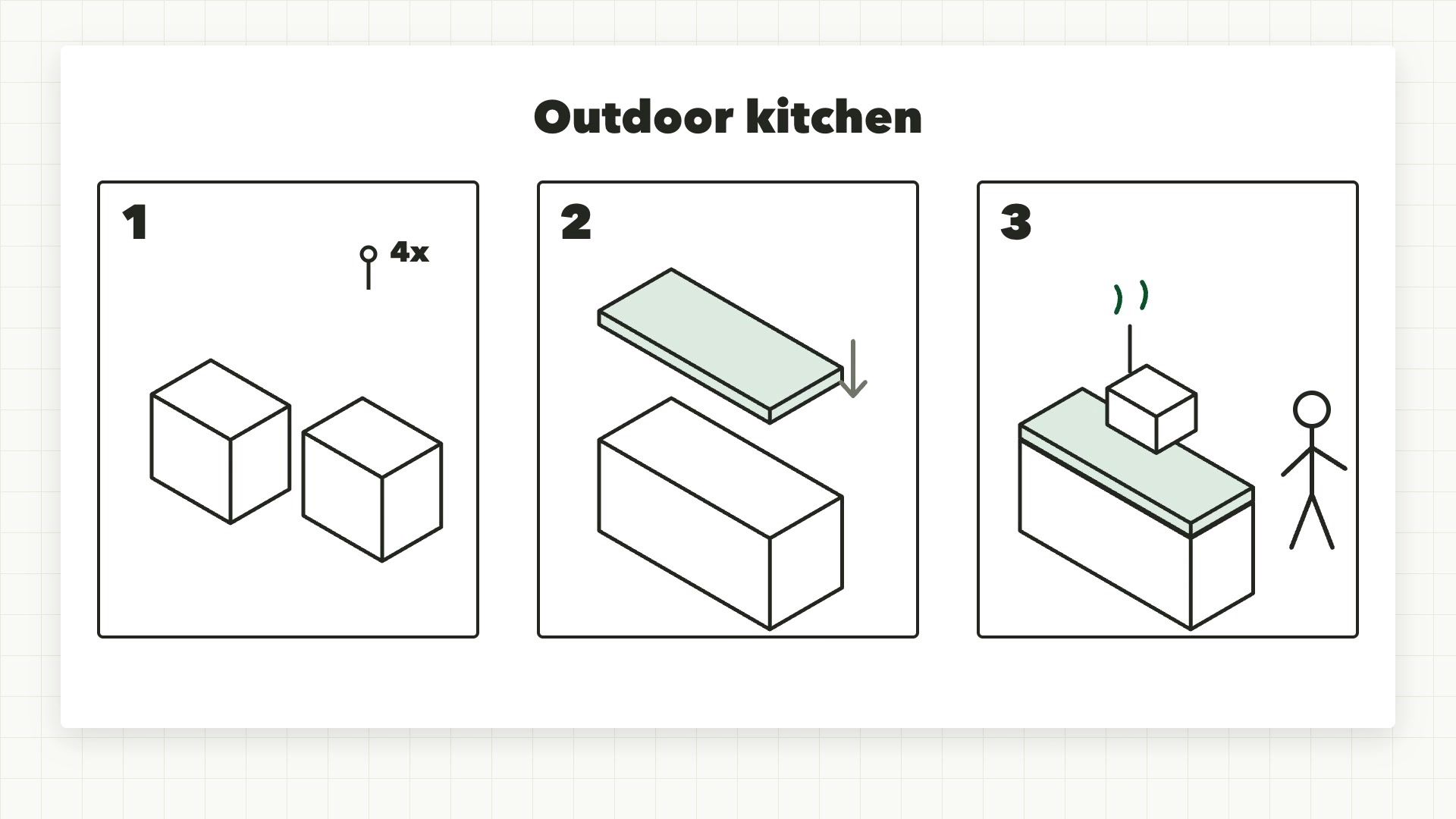
Give me the dummies IKEA guide for creating this.I was speaking to someone the other day who wanted to build an outdoor kitchen in his garden. He's not very good at DIY. So he got AI to help him make all the plans for the kitchen, then told it to make him an IKEA-style step-by-step installation guide. He didn't have to be technical. He just had to communicate his goal and the problem he was stuck on, then work back and forth with AI until it was figured out.
Why Does Teaching AI a Task Feel Slower at First?
Because you're training it, the same as you'd train a new employee. Hormozi puts the slow uptake down to complacency. There's "a short-term cost that you have to incur" to learn anything new, and his point is that once you've trained someone, "they can do the work forever".
That one made me laugh, because I posted a video about the new Instinct AI agent. The demo was a simple task that no AI had been able to do before: booking me a slot at my local recycling centre. I had a bit of back and forth with it about the information it needed and how to go about the process. And loads of the comments said, "Why bother? Why don't you just do it yourself?"
That's exactly where people give up. They think it's quicker to do the thing themselves. It's the same reason some people don't hire. "It's quicker for me to do it than to teach someone else." That's bad management and a bad way to delegate.
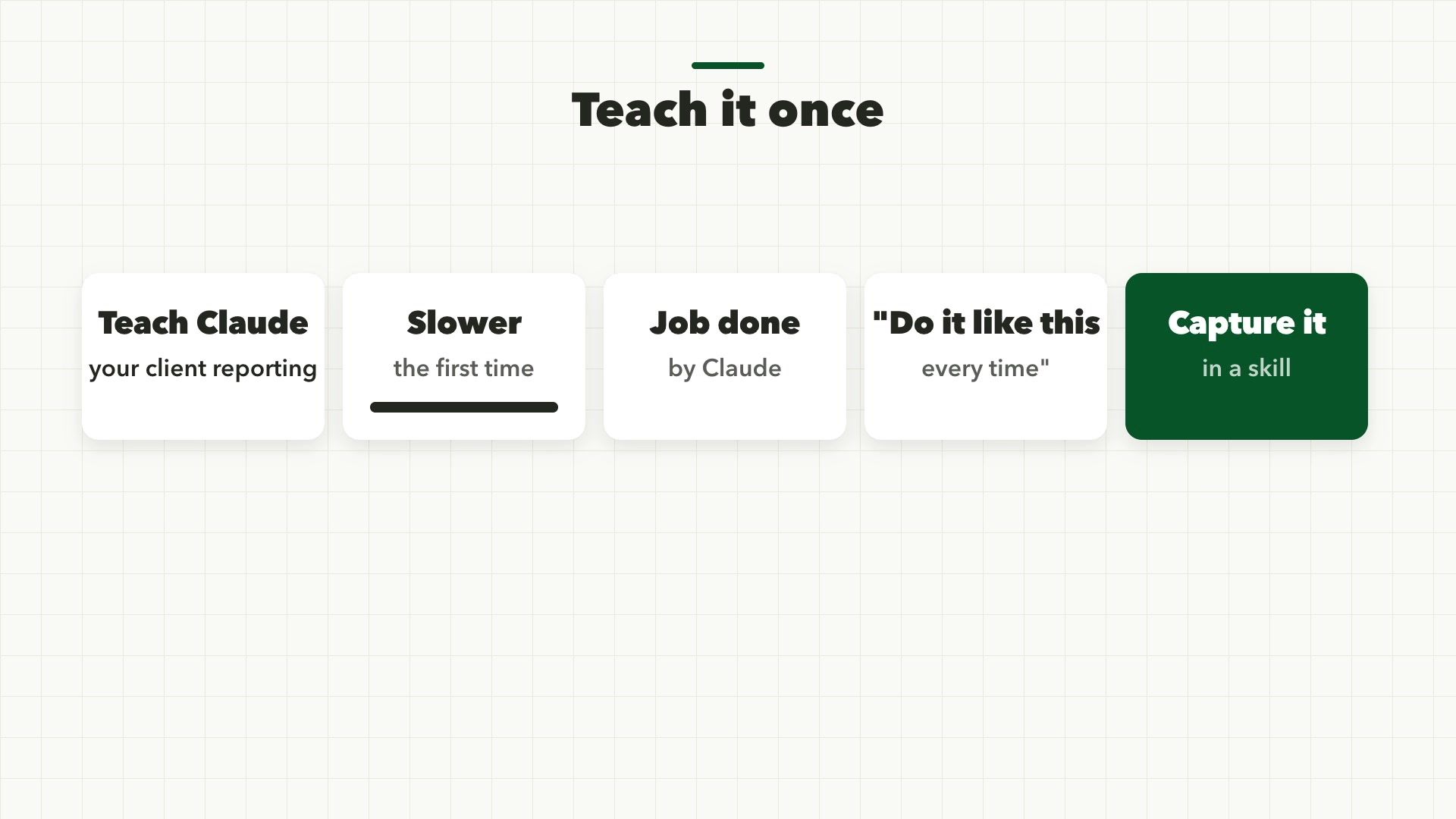
With AI you have to take the plunge and say, "OK, this is going to be slower to start with. I'm going to teach Claude how to do my full client reporting process." Yes, the first time will be slower, because you're training it on exactly how you want the task done and the output it should deliver.
But once it has completed the job the first time, you can say, "Hey, do it like this every time." Capture it in a skill or a repeatable process and it's trained. You spent a little extra time and a little pain at the start, and now it can do it on command. That's where you get the compounding flywheel: slow, slow, slow, fast. Suddenly everything gets easier because you've started taking away all the annoying stuff at the bottom.
Same as an employee. At the start it's slow and painful. After a few weeks, months or years, you can leave a good one to get on with helping run your company. Treat AI like an intern you need to train in your business.
Should You Be Scared of Using AI in Your Business?
Not scared, but careful, and this is where I only half agree with Hormozi. His line to the scared is "get over it", because "you often risk more by not adopting new technology" than by fearing the downside a small percentage of people hit. There are edge cases, he says, where someone gives an agent permissions without enough guard rails. But refusing AI because of them is like getting hacked once and never using the internet again.
I agree with him in some respects. But in a business, particularly one with multiple team members, there needs to be some governance and some thought about how you're going to do this. If people have these fears, leadership needs to address them with the team, because that fear might be what's holding people back.
And if you're in the UK or the EU, there are laws. Like any piece of software you install in your business, you need to understand how something like GDPR factors in. There are some very small steps you can take before you unleash this across your business. For example, when you're choosing accounts, use a Claude Team account or proper business and enterprise accounts. Those generally come with the right data processing agreements and are more likely to be GDPR compliant than personal and free plans. (For Claude, Anthropic's Data Processing Addendum is automatically part of its Commercial Terms, and those terms govern the Team and Enterprise plans.)
Without the right governance, policies and leadership, you end up with people on your team doing all sorts of weird and wonderful workarounds and connecting stuff up. So don't let fear or someone else's permission hold you back, but make sure you're still legally compliant and still protecting your customers while you explore this. Some guard rails are necessary.
Why Will AI Never Be Worse Than It Is Today?
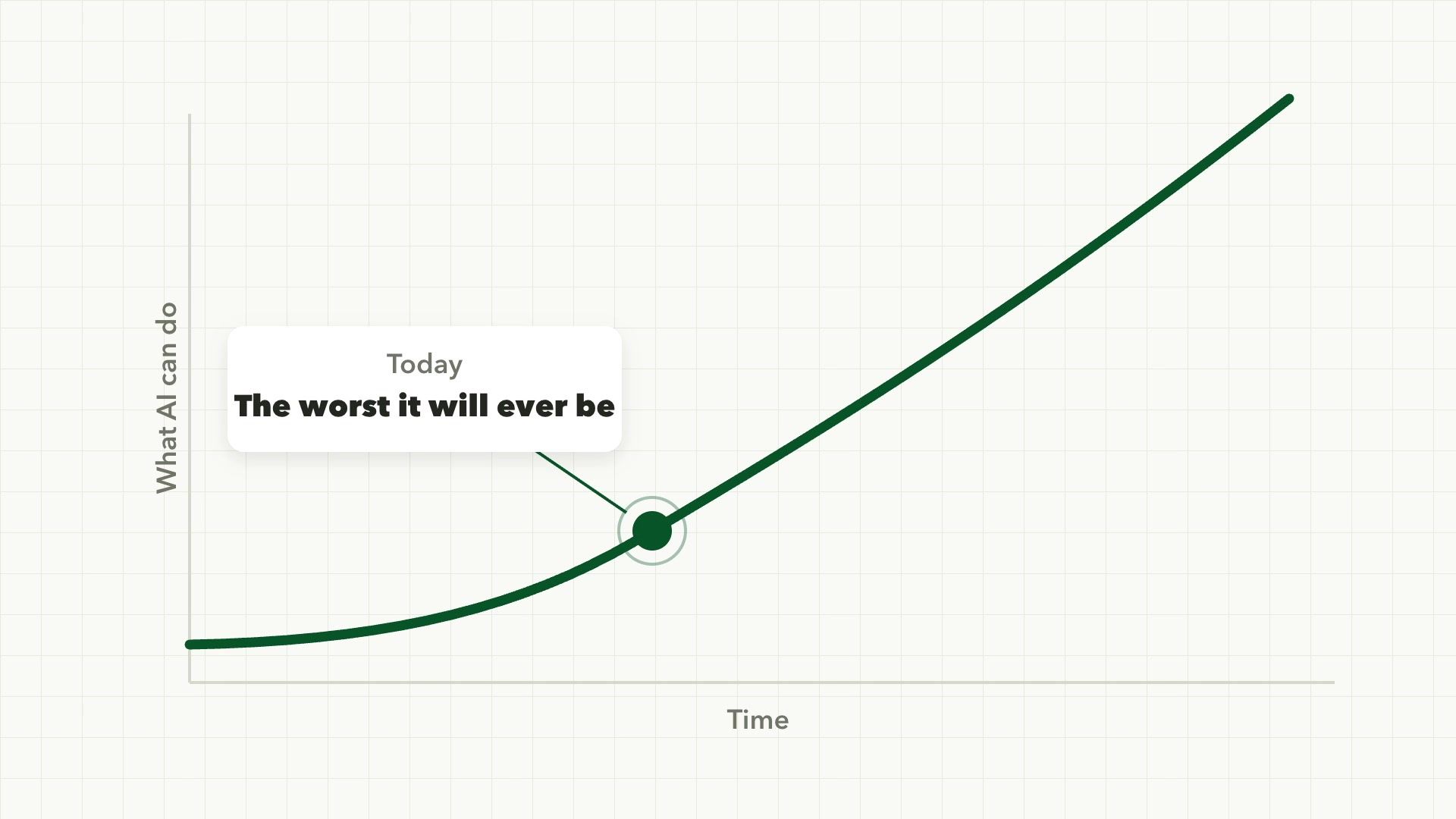
Because the AI you're using right now is the worst it will ever be. Hormozi's line is that "AI will never be worse than it is right now", and if you assume any rate of improvement, learning it should become your number one priority. And your number two, three and ten.
I think this is 100% bang on. If you'd asked me six months or a year ago whether AI should be the top priority in your business, I'd have said you should probably start trying some of this stuff out. But by the time this video went out in November 2026, it had grown exponentially over the previous two or three months, to a point where it could execute high-quality work in a business. That might be the drudgery and admin, or it might be the core products and services you deliver. For me, it can automate a whole SEO process.
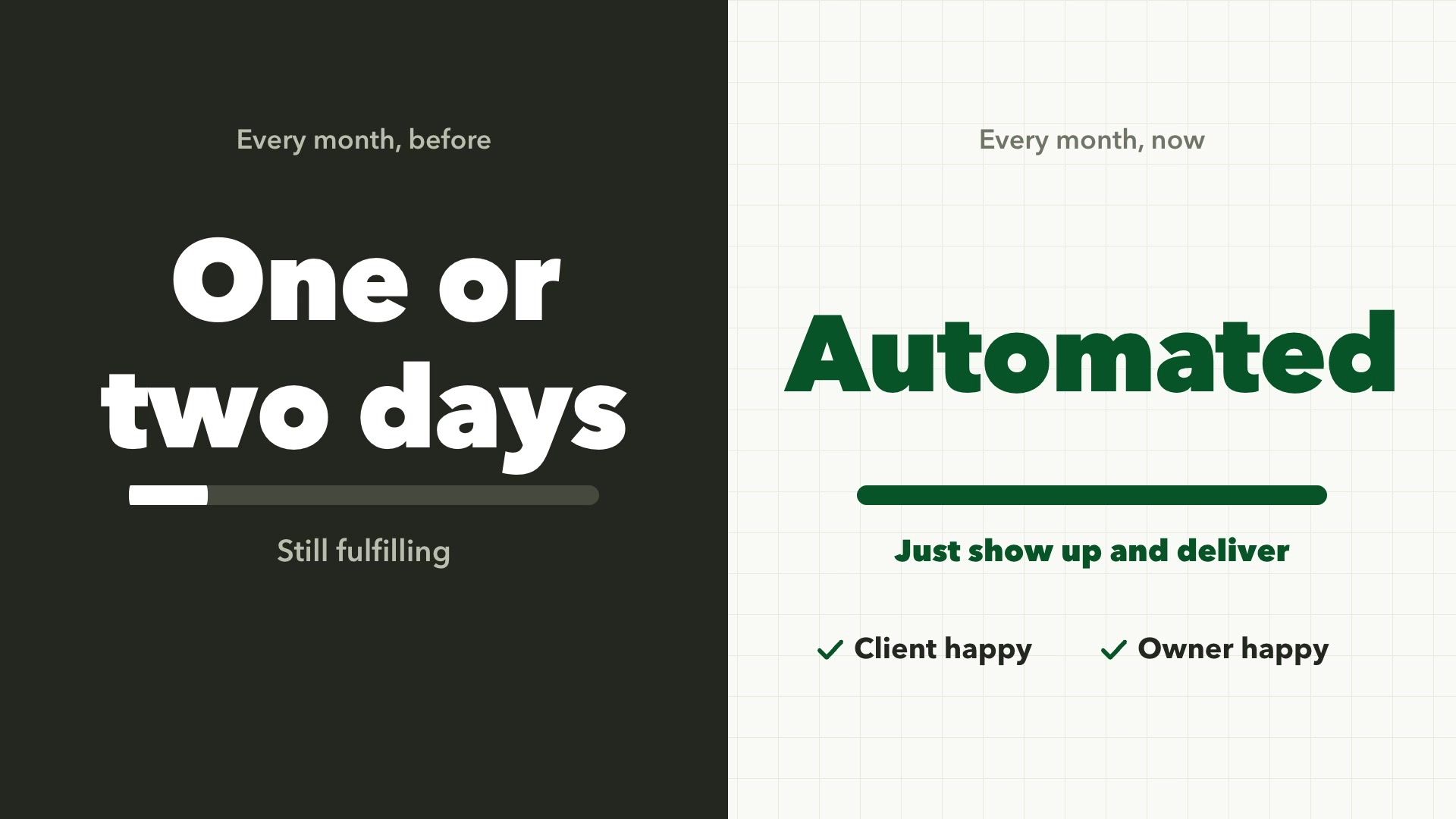
I was on the phone with an agency client just before I recorded this. They have retainer clients, and what used to be one or two days of fulfilment for those retainers every month, they've now automated. They show up and deliver the results. Their clients are happy because they get regular, consistent results, and the owner is happy because they're doing way less work for the same quality of outcome.
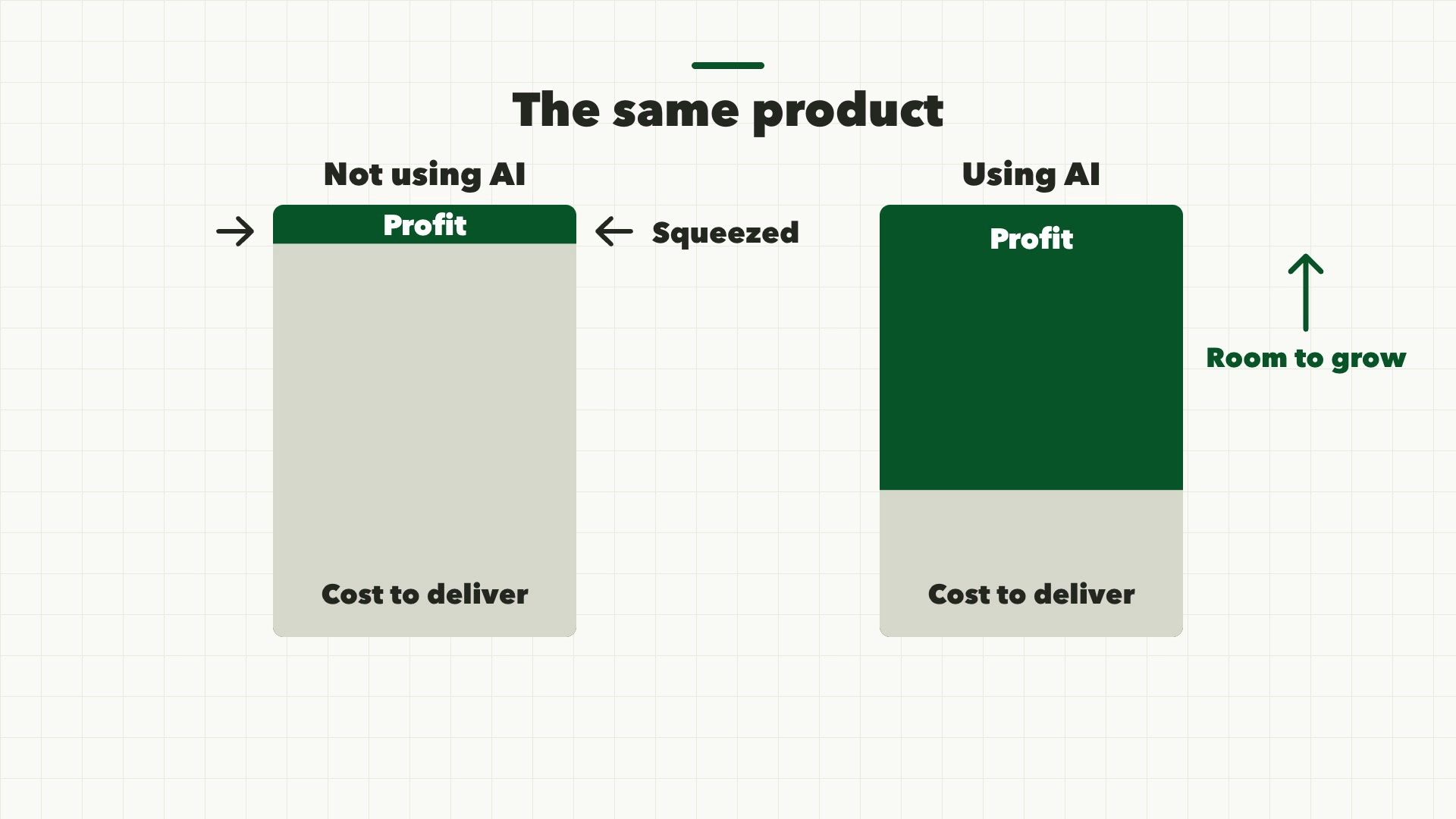
So if you're a business that isn't using this, competing with one that is, you're using a heck of a lot more resources to deliver the same product, on tighter profit margins. If your margins feel squeezed and you can't grow, that could be one of the reasons your competitors can. They figured this out at the worst point it will ever be.
Is AI Too Expensive for a Small Business?
Less than the fear-mongering suggests. Hormozi's fifth clip is about businesses using AI that are "seeing their token bills go up" and "are somehow not making more money". There's a lot of talk about how expensive tokens are, and how it's cheaper to use humans. For 99% of businesses that's simply not true. I see it every single day.
We're not talking about the high-tech startups hammering Claude Code with a bajillion tokens per staff member. For the average business, AI is one of the cheapest software products you can buy. For $20 a month you can give anyone on your team almost unlimited power to do their job. If they run out, bump them up to a $100 a month plan, and they'll struggle to hit the limits unless they're coding some crazy system. (At the time of writing, Claude Pro is $20 a month billed monthly and Max is $100 a month, per Claude's pricing page.)
And I think, as Hormozi talks about too, people are using AI and tokens on the wrong thing.
Should You Build an Army of AI Agents?
This is probably where I diverge a little bit from Hormozi. His view is that if you had "an army of these agents" working on autonomous tasks, "you could get a lot more done than you currently are", and you should do it.
He's a proponent of working harder and doing more. He's probably thinking, imagine if I worked 20 hours a day and had all these AI agents working for me too. When I think about this stuff, I want to work a little bit less. I want to make my life better, and either work on the things I love or just work less, because I've taken away the boring drudgery that keeps me pinned to my desk all day.
It's why I called my company Half Day Thursdays. When AI started to take over the monotonous reporting in my business, I didn't fill the time with more work, which a lot of people are doing. I took Thursday afternoons off to go for a coffee. My mum still rings me every Thursday afternoon because she knows I don't work then.
That's the point for me: bringing real hours back that you can spend on what you love. If that's work, fine. If it's family, fine. If it's an afternoon surf on the Cornish sea out here, that's fine too.
How to Use AI in Your Business: Hormozi vs Me
Here's how the six clips line up, so you can see where I agree and where I don't.
| Hormozi's point | What it means for a small business | Where I land |
|---|---|---|
| He isn't a tech person, but you've got to get good at this | You only need to communicate your goal. Screenshot what you're stuck on and ask for a step-by-step guide | Agree |
| Complacency stops people adopting AI | Teaching AI a task is slow the first time, like training an employee. Capture it in a skill and it repeats on command | Agree |
| If you're scared of AI, get over it | Don't let fear stop you, but put governance in place and use business accounts with data processing agreements | Partly agree |
| AI will never be worse than it is right now | Make it a priority. Competitors using it deliver the same work with far fewer resources | 100% agree |
| Businesses seeing their token bills go up are somehow not making more money | For most businesses, a $20 a month plan per person covers it, $100 for heavy users | The cost fear isn't true for 99% of businesses. People are using tokens on the wrong thing |
| An army of agents could get you a lot more done | Use AI to get your hours back, not just to do more work | Diverge |
Alex Hormozi AI FAQ
What is Alex Hormozi's main advice on AI?
That you don't have to be technical, but you do have to get good at it, and that it should be your top priority because it will never be worse than it is today.
Do I need to know how to code to use AI in my business?
No. You need to be able to explain what you want to achieve. If you get stuck, screenshot the page and ask Claude or ChatGPT for a step-by-step guide written for a non-technical person.
Is AI safe to use in a small business?
It can be, with some guard rails. In the UK and EU, think about GDPR and use business or enterprise accounts such as Claude Team, which generally come with data processing agreements, rather than personal or free plans.
How much does AI cost per employee?
For most small businesses, a $20 a month plan per person is enough, with a $100 a month plan for anyone who keeps hitting the limits (Claude's prices as of November 2026).
Should I use AI to do more work or to work less?
That's your call. Hormozi leans towards an army of agents doing more. I think AI is for getting your hours back, whether you spend them on work you love, your family or a surf.
The Short Version
A lot of people are using AI to get more done. Whereas I think AI is for getting your hours back to enjoy your life more.
I test AI on my own business and send what works every week, with the full prompts. You can join below.
See what's inside my AI community, Half Day Thursdays: halfdaythursdays.com